
Pain in the Neck – Part 1 – 2023
When I was researching a feature article for North Bay biz magazine in 2022, I learned that 80% of the U.S. population will experience low back pain in their lifetime. Since then, as I have shared my head and neck ache experience with others, I’ve learned how debilitating such chronic pain can be. It makes us crabby, discouraged, often mystified, as causes and cures elude both the sufferer and the practitioners from whom we seek help. When the condition goes on, by definition for more than six months, pain signals remain in the nervous system even when there is no apparent injury or body damage.
At the end of last summer, a Redwood Writers essay contest became the impetus for me to describe—and hopefully find insight about—my personal “Pain in the Neck.” Here is an edited version of Part 1 of this story. In Part II will share my ongoing journey with Freedom from Headaches in 2024.
* * * * * * * * * * * * *
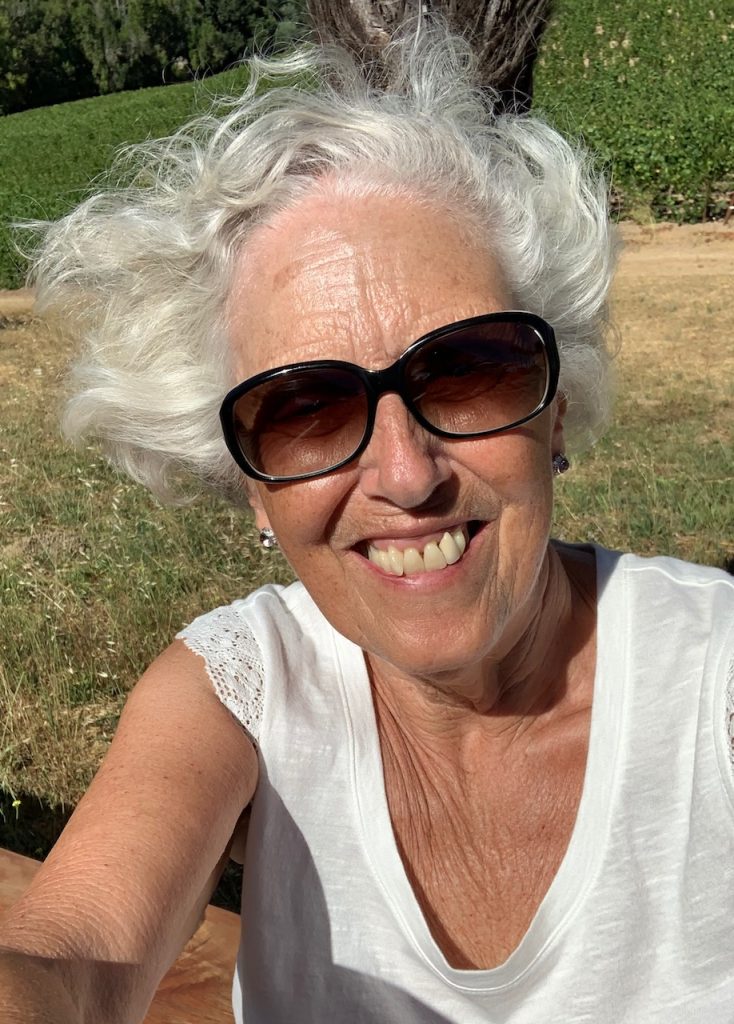 The trouble is, everyone says I look fantastic—healthy and confident, with my “unapologetic white hair blowing in the breeze.” What they can’t see is that I haven’t awakened even one morning since August of 2022 without pain sharp as a Cupid’s arrow shot through my right occipital bone and out the top of my head. When I lie on my side, the sensation in my skull is like the pinching of a too-small shoe.
Once up and about, aided by 400 mg of ibuprofen (plus a capsule of Super Milk Thistle to help support my beleaguered liver), I feel almost normal. Playing pickleball for a couple of hours or cooking up something fine is the most effective and joy-filled distraction for what is called “cervicogenic headache.” But the true definition? A pain in the neck.
Sometime in April of 2022, I woke up feeling like my head wasn’t screwed on right. After weeks of appointments with my long-time chiropractor without relief, I decided to see a physical therapist who had helped a friend return to ballroom dancing after breaking both her elbows.
From the first on-screen interview, the therapist observed that my neck was out of whack, and offered me a summer’s worth of friends-and-family discounts. The exercises I learned and the heat-and-stim treatments at the end of each session were relaxing and mildly helpful, but even with the price break, private treatment was financially unsustainable. I took the suggestion to ask my Kaiser Permanente physician to refer me to in-house physical therapy which would be covered by my insurance.
As summer turned to fall, I began to lose the thread of hope previous treatments and targeted exercises offered. The neck pain morphed into a nightly headache. It was more a pain than an ache and it was there every time I woke up in the middle of the night and was there every morning, only subsiding if I sat up or left my bed and did something to distract.
Near Thanksgiving, when I called my daughter in tears after a miserable night, she insisted I go back to my primary care doctor and ask for more help. Dr. W. had previously ordered a cervical spine x-ray which only showed “normal degeneration due to age.” Now she proposed an MRI of my head—to rule out anything serious.
The Christmas MRI indicated nothing abnormal. I was then referred to a neurologist who advised trying a headache prevention drug—Topiramate. Against my better judgement, I studied the pamphlet of possible side effects: “serious eye problems, like glaucoma” “metabolic acidosis that can cause osteoporosis” “problems with concentration, memory or speech.” I noticed that “suicidal thoughts or actions” applied to one in 500 patients.
I didn’t like those odds, but nonetheless, I began the prescribed dosage: one Topiramate tablet the first week, two the second week, and the next week three per night. By this point in the process, nothing at all had changed regarding my pain, but I felt ever less like myself. On the twenty-first night of ingesting this drug, which I was told could take two or three months to work, panic and desolation washed over me. When I tried to write myself down from the dark feelings, I toppled my desktop monitor onto my keyboard. A series of hairline cracks exploded across the bottom third of my iMac screen. “That’s it!” I said out loud to the disarray on my desk, and spent the next three weeks weaning myself off the meds—three, two, one.
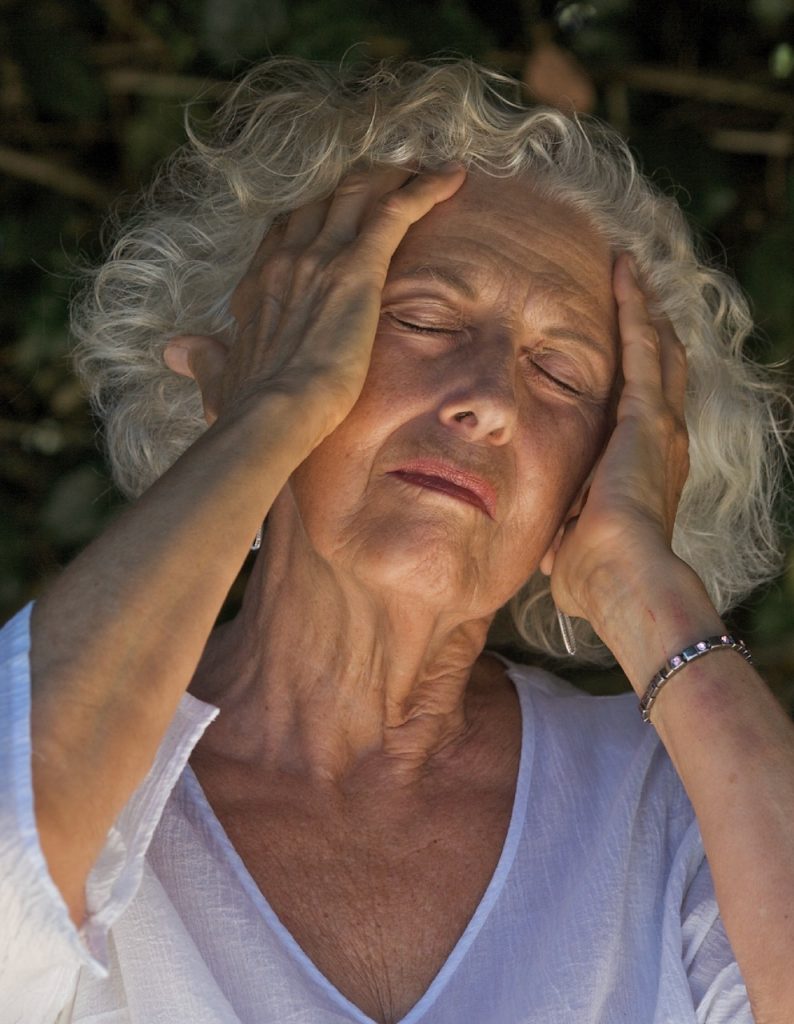 I suffered headaches from my teen years to menopause, with some decades worse than others. Like my mother and grandmother before me, I was afflicted for days at a time, often with nausea and sensitivity to light. My younger brother, too, had migraines that were intense and for which he’d inject himself in the thigh with DHE (dihydroergotamine). He outgrew the headaches and is left with “old guy’s complaints” to replace the stress-induced migraines of his career as a surgical nurse. My headaches, considered tension rather than true migraines, also subsided with age. However, this latest pain is more stubborn and requires a lot more of me than getting a prescription or a jab. I have to change the way I relate to, and listen to, my body.
Jubilación is the Spanish word for retirement; it implies a joyous celebration, the ticking off of items on a bucket list. At 77, I’m supposed to use my accumulated IRA nest egg to travel, like those smiling Facebook friends who post their pics of Yosemite Falls, Italy’s Amalfi Coast, tango dancers on Paris streets, and vistas of Loch Lomond. Yet, there I was, tapping my credit card from February through April for 14 appointments with a new chiropractor, spending $553 on acupuncture that was fascinating but didn’t relieve my neck pain, and visiting an osteopathic physician who claimed the $1,500 fee was justified by a knack for diagnosing tough cases.
The osteopath’s most useful observation was that I walked with my head jutting forward and suggested I try keeping my body centered above my feet, or even a bit behind my feet. (I visualized the Robert Crumb Comix of the 1970s, with big-thighed women characters and hipster dudes whose booted feet stretched way out ahead of their bodies as they strode through the colored panels.) This advice, which did not affect the nightly throbbing, did have postural benefits. I began to notice and correct my head position each time I sat at my computer, and bought a footstool to help increase overall relaxation at my desk.
Talk therapy sessions, targeted massage, and special treats like a day at Bliss Spa have brought me respite enough to live my life as I continue to search for both causes and cure. People are anxious to help and many a conversation begins with the words “Have you tried___?” I’m persistent, curious and determined to find answers, so I remain open to options.
My newest health practitioner, a therapist and biofeedback training coach, has explained that the headache solution is not something someone else does to me but a process I control for myself. A lifetime of sloppy posture and decades of laboring at a computer often unconscious of ergonomics, has caused my muscles to tighten into a constant state of “flight or fight,” unable to relax completely. The practice I have embarked on, (and it is a practice like meditation or training for a competitive sport) is a combination of gentle stretching, abdominal breathing and learning how to loosen my jaw and drop my shoulders. I am daily teaching my intense and driven self to cultivate a habit of relaxation. And ironically, my coach says, “As with studying the discipline of certain martial arts, what you are doing is not doing.”
Back in the 1980s, I had an oversized white sweatshirt with black block letters six inches high that spelled R-E-L-A-X. I was wearing it on holiday in the town of Mendocino when my companion took a photo of me posed in front of a parked yellow Mercedes 350SL convertible. My face was flushed pink and my hair fell in damp ringlets since we’d just spent several hours at a hot tub resort. That photo now hangs in the bedroom of my mind’s eye, reminding me in life and on this ongoing health journey: “Relax, Jennie. Let your entire body go.”
[Photo 1 by Mike Orvino. Photo 2 by Adrian Mendoza.]
Jennie, as your long-time friend (and also long-time, four years, afflicted with near-constant, crippling, chronic pain from a spinal injury) I feel you. I love you.
Well said and well shared, Jennie!
Jennie – I’m so sorry about the pain, but your intention to carefully and consistently relax and let go is so inspiring. I also want to say what a gorgeous photo that is. Or maybe it is a painting. It certainly looks like an old master’s representation of a saint. The suffering is there, but in glorious and beautiful light.